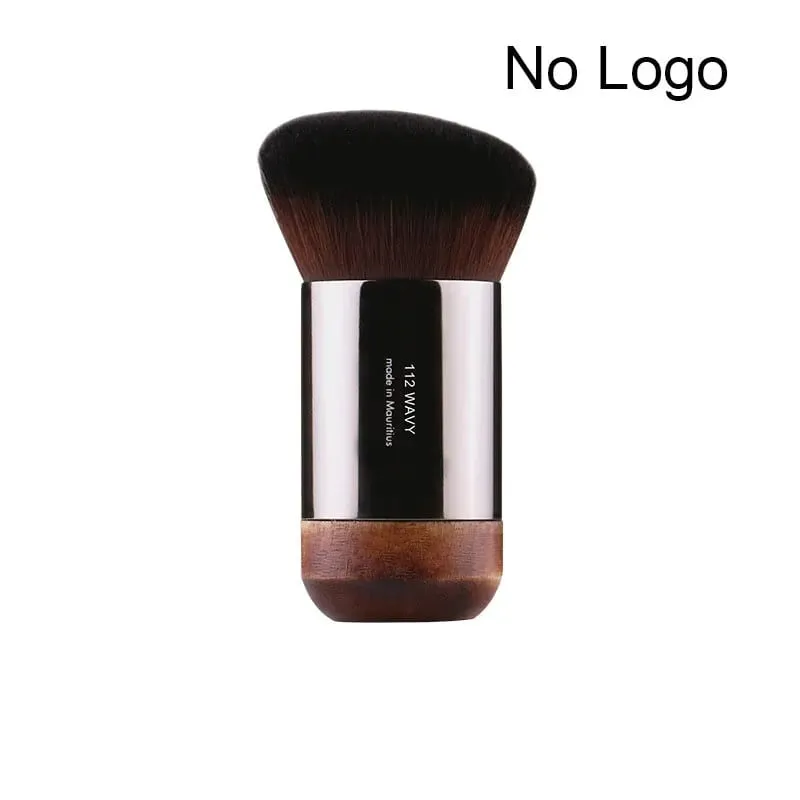
The #112 Angled Foundation Brush: The One Tool I Keep Reaching For
I've been selling makeup brushes for a long time now, and I've learned that the fancy ones with the big price tags aren't always the ones people come back for. More often than not, it's the workhorses — the simple, well-built tools that just do their job without asking for attention. That's exactly what this #112 angled flat foundation brush is. It's not flashy. It doesn't come in a velvet box with a ribbon. But after handling thousands of brushes, I can tell you this style is the one that quietly earns its spot in your routine. The SKU is P3256805536473480 if you want to look it up directly, and at $14.89 it sits right in that sweet spot where quality meets affordability.
Let's talk about what it's actually made of, because that's where a lot of cheap brushes fall apart. The handle here is natural wood, and you can feel the difference immediately when you pick it up. It's not that hollow, plasticky lightness you get from drugstore brushes that snap if you look at them wrong. The wood has a subtle grain, a smooth finish, and just enough heft to feel balanced in your hand. The bristles are synthetic hair, which is honestly the right call for a foundation brush. Natural hair absorbs liquid and cream products like a sponge, wasting your expensive foundation and turning into a breeding ground for bacteria. Synthetic fibers, on the other hand, sit on the surface of the bristles where they belong, so the product goes on your face instead of soaking into the brush. The ferrule — that metal band holding everything together — is crimped tightly and doesn't wobble, which is the first thing to go on poorly made brushes. Build quality overall? Solid. Not luxury-brand perfect, but genuinely well-constructed for the price.
Now for the exact specifications, because I know some of you want the numbers before you commit. The brush measures 7.6cm in length, which makes it a compact, travel-friendly size rather than a long-stemmed salon brush. It weighs 37 grams, so it's light enough to use for several minutes without your wrist getting tired, but substantial enough that it doesn't feel like a toy. This is a standard-sized brush — no mini or jumbo variants here, just the one size that works for most faces. As for colors, I need to be upfront: the listing shows several color options, and availability does shift depending on what's in stock at any given moment. If a specific color matters to you, check the dropdown before ordering, because I can't guarantee every shade is always available. The shape is the classic #112 angled flat design — a slightly slanted, dense head that's flat on one plane and angled at the tip.
So what do you actually use this thing for? Three scenarios come up again and again with customers. First, everyday liquid foundation. The angled edge lets you get into the corners around your nose and under your eyes without smearing product everywhere, while the flat side buffs the bigger areas like cheeks and forehead. Second, cream blush or cream bronzer. That angled tip is surprisingly good at placing color exactly where you want it and then blending the edges out before they turn into streaks. Third — and this is the one people underestimate — applying foundation to someone else, like a friend before a wedding or your mom before a family photo. The short handle and angled head give you control you just don't get from a long paddle brush. It's also small enough to toss in a makeup bag for touch-ups during the day.
Using it properly takes about thirty seconds to learn. Put a small amount of foundation on the back of your hand, dip the brush lightly, and then tap — don't swipe — the bristles onto your face. Tapping is what gives you that airbrushed, buffed finish; dragging is what gives you streaks. Work in small sections, starting from the center of your face and moving outward. For maintenance, wash it once a week with gentle soap or brush cleanser and lukewarm water. Here's the part people get wrong: always dry it with the bristles pointing down, never up. If water runs down into the ferrule, the glue breaks down and your bristles start shedding. Lay it flat on a towel with the head angled downward and it'll last you a long time.
Let me give you the honest pros and cons, because I'd rather you buy the right thing than be disappointed. The pros: the wooden handle feels great and doesn't slip when your hands are slightly damp, the synthetic bristles don't shed much even after repeated washing, the angled shape is genuinely versatile across powder, cream, and liquid products, and the price is hard to argue with. The cons, and I won't sugarcoat these: it's a small brush, so if you're used to a big fluffy foundation brush, the coverage pace will feel slower until you adjust. The bristles are dense, which is great for buffing but means you need to wash it more thoroughly than a loose powder brush, or product builds up at the base. And because it's wood, you really shouldn't leave it soaking in water or sitting in a damp bathroom cabinet — it can crack over time. Treat it reasonably well and none of this becomes a real issue.
Here's my take as someone who's unpacked and inspected more of these than I can count. The #112 angled flat design works because it solves a geometry problem. Your face isn't flat — it has curves, corners, and crevices — and a flat paddle brush can't navigate all of that. By angling the head, the designers gave you two tools in one: a precise edge for detail work and a broad surface for blending. The density of the synthetic fibers matters too, because dense bristles don't just push product around, they press it into the skin, which is what creates that seamless finish rather than a layer sitting on top. This brush suits beginners who want one tool that does most of the work, and it suits anyone who does makeup on other people and needs control. If you're a full glam devotee with fifteen brushes already, this is a nice addition but not a revelation. For everyone else, especially at $14.89, it's the kind of tool you'll wonder how you lived without.